Showing posts with label forgery. Show all posts

Thursday, July 07, 2022

Colwell on Archaic Mark

0

For a while now I have been casually on the lookout for an article in the Emory University Quarterly, and so far I haven’t had access. I searched this morning and found it online: Ernest Cadman Colwell, “An Ancient Text of the Gospel of Mark,” (Emory University Quarterly 1.2 [1945]: 65–75).
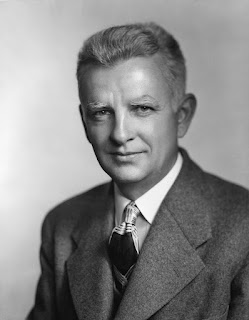
E.C. Colwell
Credit: University of Chicago Photographic
Archive, [
apf1-01777] Hanna Holborn
Gray Special Collections Research Center
University of Chicago Library.

It’s an interesting article—there is definitely a popular-level tone to it, and the way Colwell describes some aspects of textual criticism definitely reflects that. Of course we know now that Archaic Mark (which was once numbered 2427 on the k-Liste) is a forgery, but it had been my understanding that Colwell was always suspicious of it. I had been wanting to find this article to see if he voiced any such suspicions here. He does not do so explicitly, but he does talk about several unique aspects of Archaic Mark that are unlike any other manuscripts, and at one point he does make a statement that seems to hint that something was up:
The script of the manuscript is more than unusual; it is unique, The scribe of the Chicago Mark had several habits to which we cannot find parallels anywhere, and others to which no parallel exists in Greek manuscripts. He divides his text into words and even puts periods after abbreviations. These actions seem entirely normal to the twentieth-century American, but were unknown in the Greek manuscript tradition. Out of seventy-seven manuscripts photographed by W. H. P. Hatch on Mount Sinai, only one has word division, and it has other elements which suggest that it may be copied from the Greek text of a bilingual. In the large collection at Jerusalem, two manuscripts have word division, and both were written in the eighteenth century. [p. 68; emphasis mine]

That being said, do enjoy the article if you have a few minutes and haven’t seen it before.

Thursday, November 25, 2021

SBL Presentation on “Archaic Mark” (GA 2427)

0


At the SBL Annual Meeting in San Diego I gave a presentation on Archaic Mark (GA 2427), "tying up some loose ends." This paper was originally slotted for another day, but since the session was turned into a virtual one it was moved to Friday, and so I know some friends (like Jeff Cate) missed it.  

However, I have now made a new recording of a longer (and therefore more relaxed) presentation of the paper which you can access on the IGNTP New Testament Textual Criticism youtube-channel here where there is a special playlist for SBL 2021. In case anyone else who presented in NTTC would like to upload a recording, you can contact Hugh Houghton who maintains the channel. Below is my conference abstract.

“‘Archaic Mark’ Revisited: Tying Up Some Loose Ends”

The Gospel manuscript known as the “Archaic Mark” (Greg.-Aland 2427) in the Goodspeed Collection of the University of Chicago (MS 972) is now known as a modern forgery and has been removed from NA28. An important breakthrough was made in 2006 by Stephen C. Carlson who identified Philipp Buttmann’s 1860-edition as the textual Vorlage, whereas the final verdict on the case including an evaluation of the physical and chemical make-up, the palaeography and iconography was published by Margaret M. Mitchell and her team in 2010. However, there are still some loose ends of the story. In this paper I will examine the codicology, palaeography, text and iconography of both Archaic Mark and a related manuscript in St Petersburg tracing them back to the same batch of parchment from which the two manuscripts were made, likely in a workshop in Athens around 1914, and likely involving the work of two prominent artists and friends. In this connection, I will also discuss the sometimes thin line between authenticity and forgery, in particular if we distinguish the text from the artifact.

Tuesday, March 02, 2021

When Art (Forgery) Imitates Textual Criticism

5

Over the weekend I watched a documentary called Made You Look: A True Story of Fake Art. It’s about the case of $80m in fake art that was sold by the famed Knoedler Art Gallery in NYC. Knoedler was the oldest gallery in the U.S. and the scandal ended its storied history; they shut their doors in 2011.

The ARTnews review gives a good summary of what happened.

The film starts in the 1990s, when Freedman meets a woman that no one in the art world had ever heard of before named Glafira Rosales, who claims to have a trove of previously unknown paintings by the greats of postwar contemporary art, including Jackson Pollock, Mark Rothko, Franz Kline, Robert Motherwell, Richard Diebenkorn, and more. Avrich’s interviewees claim there were numerous red flags that Freedman should have spotted—Rosales’s story of how and from whom her secretive client, Mr. X, came to acquire the works seemed suspicious, and there was no documentation of the work’s provenance. Freedman claims otherwise: “It was credible, to me. I believed what I was told. There was mystery, but there’s often mystery in provenance. I hoped to solve that mystery as time went on.”

Don’t worry, the ETC blog is not getting into art criticism. I mention the documentary because there are so many parallels with the Gospel of Jesus’ Wife fiasco: a con artist targets a major institution that buys the con, lending its enormous credibility to the fakes; the con artist gives just enough info about provenance to satisfy the initial questions; when red flags do pop up, the con artist leaks a few more details about provenance to keep the ruse going; the experts who note problems are dismissed or silenced by the institution at the center; etc.

A fake Rothko on display at a museum.
At one point, a wealthy family that bought a fake talks about how they “fell in love” with it immediately. They were smitten. But it becomes clear that they didn’t just love the painting, they loved the idea of owning a previously unknown painting by a famous artist. They loved the exclusivity of it all. And this gets to the heart of the issue. Like with the Gospel of Jesus’ Wife, the key players believed the con because they wanted to; they believed because they loved the idea. There are other lessons, but those are the ones that jumped out.

Sometimes, seeing a problem in another field can help you recognize it in your own. I recommend the movie if you can catch it. It’s on Netflix now.

Friday, February 08, 2019

Is Codex Sinaiticus a Fake? New Evidence

27
Just to be clear, no. It’s not a 19th-century fake.

With that out of the way, I decided to take another look at a couple of things, and I noticed what some might consider to be new evidence in the question of whether or not the manuscript is a modern fake.

One of the biggest ‘selling points’ for people who claim that it’s a fake is the difference in colour between the Leipzig leaves and the British Library leaves, according to the images at the Codex Sinaiticus Project website. Despite at least one professional manuscript photographer taking the time to explain why it is problematic to make arguments based on the colour of those images, the colour is still a point of emphasis from people who maintain that Codex Sinaiticus is a fake.

David Daniels, author of the book Is the “World’s Oldest Bible” a Fake? (Ontario, CA: Chick Publications, 2017), recently posted a video (link and info in my longer note linked below) in which he again emphasised the colour of the leaves as part of his ‘evidence’.

So what about this new evidence I claim to have? Well, it’s not really new as much as it is a repackaging of old evidence into a way that more clearly shows why determining colour from images is a bad idea.

I’ve put a file online that goes into more detail, but I’ll give you the spoilers here.

When you compare the colour charts in the Leipzig images and the British Library images, it becomes clear that there is no way that these two sets of images were taken to the exact same standards. However, the clearest way to demonstrate this conclusion is to take a single colour from each of the colour charts, lay the two samples out in a mosaic like Daniels does, and then see how they look.

Obviously, the two sets of images were not taken to the level of precision that Daniels’ theory needs. If they were, we would see no difference in colour at all, because those two versions of yellow that you see in this image are the exact same colour in real life.

For the full description (as well as a couple of other samples like this one using other colours from the colour charts, and an argument based on raking light images), see my note here: “Unpublished Paper: ‘New’ Evidence on “Is Codex Sinaiticus a Fake?”

Tuesday, December 11, 2018

Papyrus Artemidorus in the News Again

7
This article has been updated (additions/substitutions in italics).

In 2009 Peter Head wrote a short piece on this blog about the Artemidorus Papyrus. There has been an endless debate over the authenticity of this manuscript, purportedly a work by the first-century BCE geographer Artemidorus, which was purchased in the early 2000s by an Italian foundation related to a bank group for an unbelievable price of nearly 2.750.000 EUROS ($3,369,850). The papyrus was exhibited in 2006 and then published in 2008 as Il Papiro di Artemidoro by an Italian group of scholars. However, a professor from Bari, Luciano Canfora argued at a very early stage that it was a modern forgery, possibly by the infamous 19th century forger Constantin Simonides. So, there are two camps among scholars, one defending its authenticity, one arguing that it is a fake.

Now, the manuscript has surfaced in the news again, in Italian newspapers (here, for example), suggesting that the case is closed – the manuscript has been proven a forgery. What is this fuss about? Apparently, there has been a legal investigation and the prosecuting side, the Turin Public Prosecutor’s Office has confirmed that the papyrus is a forgery, based on investigations arranged by the Ministry of Cultural Heritage (Ministero dei Beni Culturali). Well, who did the prosecutors call in as expert? Answer: Luciano Canfora & co, the one side that has argued for a forgery for many years. In fact, the news article repeats Canfora’s hilarious proposal that “it is most likely a 19th-century forgery attributed to the Greek Constantine Simonides.” As one who has studied Simonides’ forged papyri (yes, I have just submitted an article on the topic to a major journal), I must say that the Artemidorus papyrus is nothing like the papyri we know were forged by Simonides. I am ready to go to Italy to testify, just invite me :-).

-->
What was more interesting than the old arguments by Canfora & co, however, was the anticipated “smoking gun” mentioned later on in the article, namely tests of the ink. There are no decisive evidence yet, but apparently, preliminary tests have supported the case for forgery (of course not specifically by Simonides) rather than authenticity, as suggested by Piero Gastaldo, Secretary General of Compagnia di San Paolo, the foundation that bought the papyrus (related to the Turin bank that now owns it) just before he resigned. But what tests and when?

 It is suggested that the ink composition is different from that which was used in papyri from the first to the sixth century (it is unclear whether they mean 1st century BCE here). Preliminary tests have detected zinc, and suggest that the fragments were placed on a metallic net that contained zinc, and then treated with acids. There is, however, no details of this testing, and it seems that the legal case is already closed … this is interesting.

One of our anonymous readers explains that these facts of the case were presented far too long ago for anybody to be charged at this point. It was a personal investigation by a judge who is now about to retire, and therefore  "he had to publish his findings now or never. For this reason the case is closed - without that judge following his personal interest and no possibility of charging anybody, no one in the legal system will not continue with the investigation."

In 2010, a Florence-based research group published the results of their tests on the Artemidorus papyrus in the journal Radiocarbon vol 52 (2010): 356–63. They tested both the writing material and the ink with various methods including radiocarbon. There was nothing they could find to prove the case for forgery – this is their conclusion:
C4 measurements have dated the papyrus to a period that is compatible with the hypothesis of the papyrologists. However, this result alone cannot be conclusive proof of the document’s authenticity. Some have already commented that a blank ancient papyrus might have been used to draw the inscriptions in the 19th century (even though it seems unlikely that a forger used such a great support). The ink analysis can add some important information: actually, all the results support the idea of the originality of the scroll. It is true that also in this case, someone has suggested that an expert forger might have simulated the composition of an ancient ink. In any case, in spite of and in addition to these results, discussion among the scholars is ongoing, mostly based on philological and linguistic issues. It will probably continue for a long time, at least until we are able to directly date theink (perhaps in the future!)
Finally, I should point out that there is a lot more to learn about ancient ink on papyri. In fact, last year, a group of Danish scholars showed for the first time that carbon black inks on ancient Egyptian papyri from different time periods and geographical regions contain copper. This article was published in Nature. I have recently learnt that my co-author Malcolm Choat, with whom I am working on Simonides, with two colleagues has received funding from the Australian Research Council (again!) for a project “to investigate the chemical composition of papyri from ancient Egypt and their inks to identify scribes, date texts, detect forgeries, match fragmentary texts, and illuminate environmental and technological change.”

All I know is that the last word on Papyrus Artemidorus is not said.  

Update 17/12/18: Luciano Canfora posted a link to the news article on the Papy-L discussion list. I then posed a question where we can read about the scientific analyses of the ink. From Canfora's reply (to me privately) it is clear that he did not know more than what the news article said (i.e., we have no further information about these tests).

Wednesday, October 04, 2017

More on Forged Dead Sea Scrolls, or ‘The Gospel of Jesus’ Wife saga times 70’

7
The Times of Israel has a lengthy article out yesterday on forged Dead Sea Scrolls in the Museum of the Bible collection, the Schøyen collection, and elsewhere. Here are a few snippets, but the whole article is worth reading. One scholar working on it calls this the Gospel of Jesus’ Wife “times 70” in terms of its importance.
MOTB’s Nehemiah fragment
In his latest article, “Caves of Dispute,” published in the Brill Dead Sea Discoveries series this month, [Kip] Davis found that at least six of the Museum of the Bible’s 13 published fragments are forgeries. (“Published,” in this context, refers to artifacts that have been researched by experts, with their findings presented in academic journals. The Museum of the Bible collection includes three more fragments whose origin and content have not yet been published.)

In conversation with The Times of Israel, Davis said while he is convinced that six of the fragments are forgeries, “that number could be higher. There are people out there that think that all 13 of the fragments are fake. I’m not quite there, but I have colleagues who are fairly sure they are forgeries.”

Far from ignoring the forgery assertions, the Museum of the Bible is sponsoring Davis’s research and that of other scholars.

Årstein Justnes, a professor of Biblical Studies at the University of Agder, Norway, has built the blogsite The Lying Pen of Scribes to document for free public use the mounting evidence of forgeries in the post-2002 Dead Sea Scroll-like fragments.

...

“The sellers of these fragments have preyed on the well-meaning faith of Evangelical Christians who are compelled by the idea of owning a piece of ‘the Bible that Jesus read,’” said Davis.

“This is more than a simple form of manipulation,” said Davis. Given how seriously Evangelicals “are committed to their notion of sanctity of scripture,” he warned, “there is a danger of inflicting collective psychological harm.”
A couple reflections. It is good to see the Museum and the Schøyen collection investing in the effort to vet their own collections here even if that means they turn out to not be what they thought. It is not so good, however, to see Evangelical schools being duped into buying these. I remember being at Southwestern Baptist Theological Seminary when they unveiled some of their fragments and it was all quite exciting. It’s obviously not so exciting if they turn out to be forged.

For more from the blog on all this, see our past posts on the MOTB DSS publication, DSS forgeries in Bible software, curious DSS recently bought in the US; and various current projects on forgery.

Thursday, June 16, 2016

More on the Gospel of Jesus’ Wife and Walter Fritz

29
Peter Gurry has just blogged on Ariel Sabar’s Atlantic article on Walter Fritz. Apparently, Fritz admitted in writing that he is the owner of the Gospel of Jesus Wife papyrus. Among other revelations, the article contends that Fritz:
  • studied egyptology at the same institution where the GJW was verified in 1982 according to the forged accompanying documents,
  • purchased www.gospelofjesuswife.com weeks before Karen King’s Rome announcement,
  • approached Sabar about writing a factually erroneous book on “the Mary Magdalene Story,”
  • and has a higher regard for the “Gnostic” gospels than the canonical gospels.
Several of us have been convinced since October 2015 that Fritz played some central role in the Gospel of Jesus Wife saga. The first player in identifying Fritz as a person of interest was Owen Jarus of LiveScience, who interviewed Fritz much earlier, and directed me to Walter Fritz and his wife’s “Nefer Art” website. Here, I encountered a picture of the above Nefer Art Forgery (above), written in the sort of minuscule script (complete with accents!) appropriate to a modern printed edition.  The cut along the left hand side resembles one on the GJW. The Greek text, apparently some sort of magical love spell, features a likely image of Venus with Cupid and references the Titan Phoebe and her daughter Hekate. I have not been able to determine the text from which this was fabricated.

This led me to one of blogs related to Fritz’s wife, namely “Cute Art World,” in which she advertises her hand-made pendants embedded with ancient papyrus and inscribed with a Coptic nomen sacrum IC (not Greek). She blogged (31 Aug 2009),
Pendants of the Virgin Mary holding Jesus in her arms. On the picture there is IC with a dash over it, which is the Coptic writing for “Jesus”. The little roundel in the lower part of the pendant contains a small, approx. 1/12” long papyrus fragment with the original black ink on it. I glued these fibers in between the picture and the glass.  These fragments are really old and come from a larger christian papyrus, dating back to the 2nd Century A.D. The larger papyrus was probably part of a gospel or an early christian text, written in the Sahidic Coptic language. Coptic is is the final stage of the Egyptian language and consists of Egyptian words, written in Greek alphabet. Early Christians used the Coptic language, besides Greek, to write down the Gospels and other early texts about Jesus.  |  This is no hoax. I can guarantee that the small fragments in the roundel are indeed over 1800 years old. They date back in a time period shortly after Jesus’ crucifixion. I got these fragments from a reputable manuscript dealer who was restoring a larger papyrus with a christian gospel on it. The fragments were left over and couldn’t be incorporated into the big papyrus any more because they were so small. I have photos of the restoring process.
This was surprising. My guess was that the Gospel of Jesus Wife had been created sometime after the death of Peter Munro (02 Jan 2009), and these images suggest that Hans-Ulrich Laukamp’s business partner has an interest in such papyri. Around the same time, Andrew Bernhard blogged about the Owner’s Interlinear, which conclusively proved his earlier hypothesis about the GJW’s reliance on Grondin’s GThomas PDF. In the wake of this new discovery, I shared some of my findings with Lisa Wangsness of the Boston Globe, who would then become the first individual to discover Walter Fritz’s 1991 article:

Walter Fritz, ‘Bemerkungen zum Datierungsvermerk auf der Amarnatafel Kn 27’ Studien zur altägyptischen Kultur 18 (1991): 207-214.


Walter Fritz thanks Prof. Dr. Jürgen Osing for the concept for the paper, having studied at the FU - Berlin with Osing in the summer of 1990. The article details a difficult reading of a Middle Egyptian Amarna tablet relating to the reigns of Amenophis III and IV, and describing the use of “Quarztlicht,” or UV light, which naturally is only useful when one is working with carbon-based inks.  One has to know about the composition of ancient inks. The GJW and related forgeries all appear to have been written with carbon (=soot) mixtures.

I offer here a timeline of where we have now arrived.

Sept 2012  Karen King announces the discovery of the Gospel of Jesus’ Wife papyrus.  Almost immediately, Francis Watson and Simon Gathercole notice a relationship between the GJW and the Gospel of Thomas.

Nov 2012  Andrew Bernhard’s Patchwork Hypothesis proves that the GJW was copied from Grondin’s interlinear.

Apr 2014  The current blog revealed that an accompanying papyrus with the same handwriting was a forgery, calling into question the authenticity of all of the accompanying documents.

Aug 2015  With the revelation of the owner’s interlinear, Bernhard’s Patchwork hypothesis becomes irrefutable.

June 2016  Walter Fritz, a former FU-Berlin Egyptology student, claims to be the owner of the GJW.

[Update: Karen King has conceded that the GJW papyrus is probably a forgery.  Fritz had lied to her, she said, according to Ariel Sabar’s update.]

The Owner of the Gospel of Jesus’ Wife Unveiled

10
Walter Fritz, owner of the GJW (photo credit).
Wow. The most recent issue of The Atlantic has an incredible story uncovering the formerly anonymous owner of the Gospel of Jesus’ Wife papyrus. His name is Walter Fritz, a German-born man who now lives in Florida with his, shall we say, eccentric wife. Fritz denies forging the papyrus, but the reporter of the story seems unconvinced. And for good reason.

The article is long but well worth reading. It gets stranger at almost every turn. It’s a fine piece of detective work by the journalist, Ariel Sabar.

Here’s a clip from near the end:
One thing did become clear, though. When we first started talking, Fritz had claimed that he had no stake in the papyrus’s message. But I began to see that he in fact cared deeply. As a teenager he wanted to become a priest, he said, but he later came to believe that much of Catholic teaching was “bullcrap.” Particularly flawed was the Church’s claim that the Gospels of Matthew, Mark, Luke, and John were truer accounts of Jesus’s life than the Gnostic Gospels.

He pointed to the fact that almost no papyri bearing the canonical Gospels have been carbon-dated, because such testing would cause physical damage to the New Testament’s seminal manuscripts—damage that institutions like the Vatican Library would never countenance. But with the new ink tests at Columbia—the ones King had told me about—scientists can date papyri without damaging them. Fritz said these tests could well show that most of the Gnostic Gospels were written before the canonical Gospels, making them better witnesses to the historical Jesus—a view that virtually no serious scholars share.

“All that discussion that the canonical Gospels were way before anything else—that’s utter bulls**t,” Fritz told me. “The Gnostic texts that allow women a discipleship and see Jesus more as a spiritual person and not as a demigod—these texts are probably the more relevant ones.”
My favorite line—and there are many good ones in this story—has to be this one:
He [Fritz] had even more scorn for critics of the Jesus’s-wife papyrus, deriding them as “county level” scholars from the “University of Eastern Pee-Pee Land” who think their nitpicking of Coptic phrases can compete with scientific tests at places like Columbia University and MIT that have yielded no physical proof of forgery.
I trust Christian will be updating his CV accordingly!

Read the whole thing here. 

Saturday, August 29, 2015

The Gospel of Jesus Wife and Grondin's Interlinear

11

Breaking News

Andrew Bernhard, independent scholar, has produced new evidence that once again demonstrates the modern origins of the Gospel of Jesus Wife (GJW).  For the technical details, I refer the reader to Bernhard’s analysis, here.

Grondin’s Interlinear

I am a huge fan of Michael Grondin’s online resources.  He has been a trailblazer in terms of making resources related to the Gospel of Thomas and related topics accessible online for more than a decade.  As Bernhard argued in 2012, Grondin’s interlinear translation of the Gospel of Thomas was particularly helpful to the forger of the GJW in creating a patchwork text in which Jesus says “my wife.”  Several facets of the Coptic clearly were gleaned from the Grondin PDF, indicating that the GJW itself could be no older than the PDF uploaded in 2002.

The Owner’s Transcription

A modern owner of the GJW wife provided Karen King with a transcription and translation of the papyrus, which is now available online.  Bernhard has shown that this transcription is not itself a transcription and translation from the GJW fragment, but clearly a reiteration of Grondin’s PDF.  The cumulative weight of the agreements is startling and irrefutable.  I mention only one of many agreements, here, as it reflects a Greek term.  The third line of the GJW uses the Greek-Coptic loanword derived from ἀρνέομαι.  Both Grondin and the Owner’s Translation render this loanword as “abdicate,” a gloss not found in, for instance, the LSJ or BDAG.

Some Notes on the Image

Although I leave the content of the Owner’s Transcription to Bernhard, my own analysis can be downloaded as a PDF (cf. link below).  I would like to note some contextual clues which this new document provides to our story:
  • This Owner’s Transcription was prepared after the inscription of the GJW papyrus, since it cites the forger’s own errors.
  • The owner has apparently photographed a print-out of this document with a cell phone.  The paper has creases and is bowed at the top and bottom.  A few characters are cut off of one side.  The manila coloring derives from indoor lighting on normal printer paper.  There is a small hole or blemish in the midst of the transcription.
  • I would guess that the forger has used the ASCII font CS Coptic Manuscript.  This document was not prepared by Peter Munro in the 1980s on a typewriter!   The document includes numerous typos, some of which indicate a weak knowledge of Coptic.
  • The file creation date has been wiped. One can only read the XMP version (Adobe XMP Core 4.1-c036 46.276720, Mon Feb 19 2007 22:13:43).  Please let me know if you can make anything of this.
  • The wording of the title is definitely leading since the text contains no clearly Gnostic material, “Coptic Papyrus, Sahidic, Gnostic Gosple (sic), probably 3-5th Centruy (sic) A.D.”  This could be a synthesis of popular opinion on the Gospel of Thomas, or could reflect opinion on the Gospel of Judas, which was big around 2008.  I would suggest that the GJW emerged from the latter hype — and probably after the death of Peter Munro (2 Jan 2009).
  • As already mentioned, this is sloppy on many levels and suggests that the forger has a weak command of Coptic at best, and probably no experience with editions of ancient manuscripts.
  • I always wondered if the forger had any riddles built into the seemingly unreadable verso.  The Owner’s Transcription does not offer any clues to what was written on the verso.

What’s Next

This only proves beyond question what essentially all specialists already had concluded.  If we are to continue the discussion with this forged papyrus, as has recently been suggested, then the next step is pursue the remaining documents to attempt to identify the forger.  Who knows what the other documents may hold in terms of clues?  In particular, I would like to see the handwritten note, which probably preserves the forger’s hand.  If the current owner is the person mentioned in the bill of sale, then he/she has some interesting questions to answer.  I enthusiastically thank Karen King for uploading the Owner’s Transcription, and would like to request that the remaining documents (bill of sale, handwritten note and typed note) also be shared, if possible.

Monday, August 24, 2015

The Gospel of Jesus Wife — the saga continues ...

3
This is a synthesis of some breaking news developments on the Gospel of Jesus Wife forgery with a short comment by myself at the end.

Karen King, Harvard professor 

On pages 8–9 of the most recent BAR issue (Sept–Oct 2015), Karen King responded to prior comment, indicating that she still believed that the GJW could be an authentic ancient witness to a married-Jesus tradition in the Early Church or Islamic-era Egypt.
At this point, when discussions and research are ongoing, I think it is important, however difficult, to stay open regarding the possible dates of the inscription and other matters of interpretation, to consider the implications that scholars are operating with different methodological assumptions, and to take into account the enormity of the gaps in our knowledge of both ancient and modern contexts.

Owen Jarus, Live Science reporter

In terms of investigative journalism, Jarus was the first to openly call the GJW story into question, especially with regard to the person of Hans-Ulrich Laukamp, the purported former owner of the papyrus.  I was skeptical of his Laukamp arguments at first, but now it is clear that the entire modern history of the GJW is indeed a forgery.  In a recent Live Science article, Owen Jarus has produced handwriting samples from Laukamp which, he argues, could be used to authenticate or inauthenticate the accompanying documents.  Further, he reports that further tests may be used to revive the debate.
In addition, James Yardley, a senior research scientist at Columbia University, told Live Science that the new tests confirm that the Gospel of Jesus’s Wife holds different ink than the John papyrus. This could undercut Askeland’s argument that the two papyri were written by the same person.

Andrew Bernhard, independent scholar

Andrew played a crucial role in the beginning of the controversy, publishing a patchwork theory which amalgamated prior assessments by Gathercole, Lundhaug-Suciu, Watson and others, and which further linked the GJW to a particular modern source, a 2002 online PDF produced by Mike Grondin.  Bernhard has just renewed a call for King to release the documents related to the GJW controversy, with a summary stressing why such a release remains necessary (here).
Nonetheless, I have become convinced that identifying (or at least trying to identify) the forger may be the only way to bring an end to the strange saga of the Gospel of Jesus’ Wife. This will require that Professor King identify the owner (as she has said she can legally), make the three supporting documents cited in her article (p. 31) available for public inspection, and release the English translation given to her with the papyrus fragment. We need access to anyone who may have been involved with what now seems to be an obvious forgery, and we need all potentially pertinent evidence to be made available.

My own response

I have expressed my opinion that the GJW has been so exhaustively proved a forgery, that the matter could be laid to rest.  With regard to provenance documents and the identity of the present owner, I had surmised that King had legal or ethical reasons for withholding these.  After all, what more could be gained from identifying the forger when everyone knows that the GJW is a fake?  Her suggestion that the GJW could be authentic has caused me to reconsider.  I would suggest that, if she considers the debate “ongoing,” then she should without hesitation produce the relevant materials.  Furthermore, I would suggest that it would be disingenuous of King to conduct further Raman-spectroscopy testing (or the like) in highly-speculative support of authenticity and to simultaneously withhold documents which would almost certainly demonstrate forgery.

King cited the prior set of scientific tests and paleographic analysis infelicitously, suggesting that they supported authenticity.  Readers can reference my reaction, here.  I am concerned that Yardley’s tests will further murk up the waters, by exaggerating some minor differences between the ink of the GJW and the Harvard Lycopolitan John.  This would be an appeal to science for something that (1) is fairly plain to the naked eye and (2) was already covered with a prior test.  These two documents are remarkably similar in regard to their ink, writing instrument and character formation — and in their utter dissemblance from any known ancient parallel.  Even the prior Raman tests suggested only minor differences.  In the New Testament Studies response, Ira Rabin argued,
It is noteworthy that their own statistical analysis does not support the conclusion that the inks of the two sides of GJW are distinct from that of JnFragm offered in the executive summary. In Fig. 8.2 (top) of the report ID/IG, the intensity ratio of the disordered and ordered bands for both fragments clearly falls within the error bars. (363)
In other words, the prior study, when accurately interpreted, demonstrated that the two shared essentially the same ink.  I would suggest that we let the matter drop.  If Karen King would like to continue to the discussion, then she should produce the documents which will allow scholars to potentially identify the forger.

Wednesday, June 24, 2015

Gospel of Jesus’s Wife ... Again

13

The most recent issue of the journal New Testament Studies offers a series of articles on the Gospel of Jesus’s Wife controversy, all contending that the fragment is a modern creation and not an authentic ancient manuscript.  The following list summarizes the articles:

New Testament Studies 61.3 (July 2015)


Update (TW): And here is a video interview about the story with Simon Gathercole produced by Cambridge University Press in conjunction with the NTS volume.


Wednesday, May 07, 2014

Pseudo-Gospel of Jesus Wife as Case Study

17
In his article in the Wall Street Journal entitled 'How the 'Jesus' Wife' Hoax Fell Apart', Jerry Pattengale concludes with an interesting comment: 'this episode is not totally without merit. It will provide a valuable case study for research classes long after we're gone and the biblical texts remain.'

So, given that the whole debacle is basically over (except for mopping up exercises), what lessons can be learnt?

a) It is possible for a forger to get hold of papyri, mix ink according to ancient conventions, compose a semi-plausible pastiche of a text, and mislead scholars, academic institutions, the media, and the public. Exactly what he (or she) hoped to gain from it is not clear, but if it was simply mischief, then he has probably far exceeded his wildest dreams. Given this possibility it is important that if someone approaches you with an unpublished text which meshes in with your own academic interests, then critical skepticism rather than credulity should control your responses. Nothing is innocent until proven guilty in this scenario. Also the forger will target a scholar who he thinks is persuadable, not a manuscript expert, and who has wider credibility to make the discovery known (remember that in this case Prof King at first didn't respond to the invitation, but the forger didn't go to some other scholar, he waited a year and then went back to reel in Prof King).

b) Get the back story straight and get all the documents involved. Although at the time and in retrospect we may think that the problems of palaeography, subject matter, and textual composition with the Pseudo-Gospel of Jesus' Wife* were sufficient to conclude it was a fake; the additional confirmation of that came from the Pseudo-Gospel of John Fragment and the proof that it was copied from a published form of a text. That conclusive anachronism becomes the nail in the coffin which is universally convincing (just as its demonstrable dependence on a published edition of Mark finally did for 2427). So the people calling for access to the whole collection in 2012 are vindicated.

c) The results of scientific tests need to be carefully interpreted. Don't just read the summaries that are repeated in the press releases. Get hold of the full scientific reports. Again, that was an incidental key step in this process (because the scientific ink report also happened to have a photo of Ps-John).

d) Careful observation of the actual manuscript (or good images) may generate suspicion and even offer pointers to forgery which may be individually persuasive, but generating a consensus requires multiple points of suspicion (and/or clearcut anachronism).

e) Get high resolution images on the internet and let some crowd-sourcing do the critical work. In this episode the scholarly blogs on the subject come out pretty well, while the Harvard folk are looking a little gullible. The blogs sorted in a month what Harvard couldn't. We all know when bloggers get their teeth into something they can be tenacious and feed off each other. Surely there will now be scholarly articles on this mess, in NTS and hopefully in HTR, but I doubt they'll offer more than the blogs have already done.

f) Composing a plausible ancient text by free composition is difficult. Several recent forgeries have involved creating text by copying and adapting existing published texts of similar type (both of these obviously Ps-GJW as Watson, Bernhard and others showed; Ps-John as Askeland, Suciu, have now shown, and presumably some of the others in the same collection which haven't been made public yet; the lead codices, etc.). So scholars should look, not only at comparing new documentary finds with other ancient texts, but also with published forms of similar texts. Here tell-tale anachronisms (like following the Grondin misprint or having 17 line endings agree except when a page is turned) are perhaps the most generally conclusive bits of the evidence.

g) Forgers invent fake histories, provenance and documents to bolster the authenticity of the forgery, but these are a potential weak link. No surprise that in this case all these documents have been kept from the scholarly community. 

h) don't worry if your PhD is in something other people think is obscure (like Coptic manuscripts of John) one day you might have the very bit of information that the rest of us need. 


Thursday, October 11, 2012

Gospel of Jesus' Wife – Final Death Throes?

21


The authenticity of the Coptic “Gospel of Jesus’ Wife” fragment, announced by Karen L. King during the 10th International Congress of Coptic Studies in Rome, and submitted for publication in Harvard Theological Review, has been severely doubted from the beginning  by a number of scholars, including co-authors of this blog for a number of reasons relating to palaeography and textual content.

Francis Watson and others have demonstrated that the new “Gospel” is in effect a collage of words and phrases from The Gospel of Thomas. Now, some very telling signs are turning up successively that the papyrus text has been copied from Mike Grondin’s on-line interlinear translation of the same. The possibility was pointed out first by Andrew Bernhard because of the awkward translation of line 6. From what I hear, Bernhard will present more compelling evidence on his website devoted to The Gospel of Jesus’ Wife very soon. Stay tuned!

Update:  Voila (Andrew Bernhard)!

The straw that breaks the camel’s back: “Line 1 of the Gospel of Jesus’ Wife fragment copies a typo from a website interlinear of Coptic Thomas“ (see Mark Goodacre’s post)


 Our previous posts in chronological order:

Gospel of Jesus’ Wife (Askeland’s “live report” from the Coptic Congress in Rome where the fragment was announced by Karen King)

Yet Another Question about the So-Called Gospel of Jesus’ Wife

A New Twist in the So-Called Gospel of Jesus’ Wife Saga

Top-notch Coptologists Judges GJW to Be a Fake 

Was Mrs Jesus Pimped? 

More questions on Jesus’ Wife Fragment