

Norman Simón Rodríguez has translated Maurice Robinson’s essay defending the Byzantine priority position into Spanish. You can read it free online.

Norman Simón Rodríguez has translated Maurice Robinson’s essay defending the Byzantine priority position into Spanish. You can read it free online.
I do not mean to flog the Byzantine method on this blog, I promise. But I am writing on the topic of method right now and some things just fit better on a blog than in a footnote and I want to record them before I forget.

What is that claim? Here is what Robinson says is the “essence” of the method in his seminal essay (emphasis his).
12. The real issue facing NT textual criticism is the need to offer a transmissional explanation of the history of the text which includes an accurate view of scribal habits and normal transmissional considerations. Such must accord with the facts and must not prejudge the case against the Byzantine Textform. That this is not a new procedure or a departure from a previous consensus can be seen by the expression of an essential Byzantine-priority hypothesis in the theory of Westcott and Hort (quite differently applied, of course). The resultant methodology of the Byzantine-priority school is in fact more closely aligned with that of Westcott and Hort than any other. Despite his myriad of qualifying remarks, Hort stated quite clearly in his Introduction the principles which, if applied directly, would legitimately support the Byzantine-priority position:
As soon as the numbers of a minority exceed what can be explained by accidental coincidence, ... their agreement ... can only be explained on genealogical grounds[. W]e have thereby passed beyond purely numerical relations, and the necessity of examining the genealogy of both minority and majority has become apparent. A theoretical presumption indeed remains that a majority of extant documents is more likely to represent a majority of ancestral documents at each stage of transmission than vice versa.13. There is nothing inherently wrong with Hort’s “theoretical presumption.” Apart from the various anti-Byzantine qualifications made throughout the entire Introduction, the Westcott-Hort theory would revert to an implicit acceptance and following of this initial principle in accord with other good and solid principles which they elsewhere state. Thus, a “proper” Westcott-Hort theory which did not initially exclude the Byzantine Textform would reflect what might be expected to occur under “normal” textual transmission.
It is this claim to a “normal transmission” that I take issue with. But more than that, it is what Westcott and Hort take issue with and they do so on the very page that Robinson quotes. Also, they do so not because they jump to anti-Byzantine qualifications. Instead, the very next sentence after the section Robinson quotes says, “But the presumption [i.e., the essence of the Byz position] is too minute to weigh against the smallest tangible evidence of other kinds.” Why is this? Because
At each stage of transmission the number of copies made from each MS depends on extraneous conditions, and varies irregularly from zero upwards: and when further the infinite variability of chances of preservation to a figure age is taken into account, every ground for expecting a priori any sort of correspondence of numerical proportion between existing documents and their less numerous ancestors in any one age falls to the ground. This is true even in the absence of mixture; and mixture, as will be shown presently (§§ 61, 76), does but multiply the uncertainty. (p. 45).
Robinson writes that only the activity of a “formal recension” would undermine the principle behind the Byz priority position. That is, of course, exactly what WH did with the Syrian text and Robinson is right to reject it, as do most of us today. But, importantly, a formal recension is not what WH here say undermines their “theoretical presumption.” What they point to instead is a factor that is just as serious and happens to be well documented for the NT, namely, contamination or mixture. Contamination, as we know, can wreak havoc on a simple genealogy and the notion that a majority of later manuscripts reflects a majority of early ones is nothing if not simple (NB: I did not say simplistic or dumb or naïve). In other words, the NT text does not follow a normal transmission process.
The implication for WH is that, “For all practical purposes the rival probabilities represented by relative number of attesting documents must be treated as incommensurable.” (pp. 45–46). The theory of a majority of later manuscripts reflecting a majority of earlier ones does not fit the facts. There is no safety in numbers. Contamination does not allow for it.
The Byzantine priority position, then, is not wrong because it gives preference to the Byzantine witnesses; it is wrong because of why it does so.
Pierpont sent the first page of this short essay to Maurice Robinson on June 8th, 1990. The first page appears to have been written originally on April 14th, 1990. Later, on July 13th, Pierpont sent Robinson the second page. He writes: "The part page goes with and follows what I sent previously on "Dean Burgon and the TR". It is part of a further section, but Wilbur [Pickering] rightly suggested it be added here." I have added in links to the transcription to make checking the quotes easier.

DEAN BURGON AND THE RECEIVED TEXT


Here is another installment in the series of unpublished papers by Williams G. Pierpont, scanned from the Maurice Robinson Collection. This two-page essay is undated. I don't know when we'll be able to put it on CSNTM, so I am making it available here.
REQUISITES AND BASICS FOR TEXTUAL CRITICISM OF THE GREEK NEW TESTAMENT
[By William G. Pierpont, undated]
1. NECESSITY. Scarcely any two of the many hundreds of manuscripts of the Greek New Testament agree exactly with each other-- even after ignoring the obvious and easily corrected simple scribal errors. Nor is there any divinely established or humanly agreed-upon standard against which all others may be corrected. Therefore textual criticism is necessary to establish, where there are significant differences, which readings are to be considered those of the autographs.
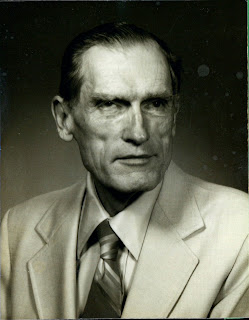 |
| William G. Pierpont (photo c. 1980) |
While I am not a Byzantine prioritist myself, I have the greatest respect for both Robinson and Pierpont and have deeply enjoyed reading much of the material. The reverence for God’s Word these men had while preparing their edition (2018 edition available here) is both convicting and encouraging. In his unpublished papers, Pierpont is thoroughly Christian in everything he writes, and I can’t express how much I appreciate that.
With Robinson’s permission, I am preparing a “guest post” by Pierpont (assuming they don’t kick me off the blog first for stirring the pot too much!). In the next few days, I’ll post here one of Pierpont’s unpublished papers. They are almost all very short—this one is one of the longer ones at about 4 pages long. I hope Pierpont's writings are as edifying to you as they have been to me.
 |
| Rembrandt’s Return of the Prodigal |
18 ἀναστὰς πορεύσομαι πρὸς τὸν πατέρα μου καὶ ἐρῶ αὐτῷ· πάτερ, ἥμαρτον εἰς τὸν οὐρανὸν καὶ ἐνώπιόν σου, 19 οὐκέτι εἰμὶ ἄξιος κληθῆναι υἱός σου· ποίησόν με ὡς ἕνα τῶν μισθίων σου.Then, when he does see his father, he gives this slightly truncated form of his speech:
18 I will arise and go to my father, and I will say to him, “Father, I have sinned against heaven and before you. 19 I am no longer worthy to be called your son. Treat me as one of your hired servants.” ’
21 εἶπεν δὲ ὁ υἱὸς αὐτῷ· πάτερ, ἥμαρτον εἰς τὸν οὐρανὸν καὶ ἐνώπιόν σου, οὐκέτι εἰμὶ ἄξιος κληθῆναι υἱός σου.This is verbatim from vv. 18–19, except for the last bit which is left off. Not surprisingly, some manuscripts include it. Also not surprisingly, most editions reject the last bit, no doubt, as a harmonization to v. 19 (see Tregelles, Souter, RP, SBLGNT, NA28/UBS5, THGNT). Here is the evidence from NA28:
21 And the son said to him, ‘Father, I have sinned against heaven and before you. I am no longer worthy to be called your son.’
ποιησον με ως ενα των μισθιων σου ℵ B D 33. 700. 1241. ℓ 844 vgmss syhThis variant is also one of many in Luke that had its grade inflated (B to A) from UBS3 to UBS4. The one exception to the strong consensus noted above is WH who have the longer reading in brackets—not so surprising given their affinity for ℵ B. What is striking is that, not only is the shorter reading attested by Byz, but the longer reading is also attested by such important witnesses as ℵ, B, D, 33.
omit 𝔓75 A K L N P Q W Γ Δ Θ Ψ ƒ1.13 565. 579. 892. 1424. 2542. ℓ 2211 𝔐 lat sys.c.p co
 Here’s another interesting shorter reading preserved for us in the Byzantine text, this one from 1 Cor 9.20:
τοῖς ὑπὸ νόμον ὡς ὑπὸ νόμον, μὴ ὢν αὐτὸς ὑπὸ νόμον, ἵνα τοὺς ὑπὸ νόμον κερδήσωByz along with D2 (L) Ψ 1881 and the Peshitta (per NA27) don’t have the phrase μὴ ὢν αὐτὸς ὑπὸ νόμον. It’s a case of parablepsis and so another place where the Byzantine text unexpectedly preserves a shorter, secondary reading.
To those under the law I became as one under the law (not that I was myself under the law) in order that I might gain those under the law.


 The most noteworthy feature of the Byzantine priority position to me is not that it seriously values the Byzantine text (I think that’s generally good); it’s that it always prefers a Byzantine text. It’s that “always” that I’ve never been able to fully stomach. I find it incredible that the text found in any one manuscript or subset of manuscripts is always right.
 Earlier this year, I wrote about two important, shorter readings in the Byzantine text in 1 John 2.23; 3.1. I suggested that they were important because they both look to be simple omissions by parablepsis and so secondary readings. That said, I find it impossible to believe that the majority of manuscripts all independently agree in these omissions, which led me to conclude that
... in some cases, the Byzantine text goes back to a single exemplar that is not the autograph and not in agreement with our earliest extant Greek witnesses. These two cases also illustrate well the reality that no single text-type or manuscript has a corner on the original text all the time. In other words, why I’m a reasoned eclectic.This past week I came across a similar case in John 19.3. Here is the text of vv. 2–3 in NA28
2 καὶ οἱ στρατιῶται πλέξαντες στέφανον ἐξ ἀκανθῶν ἐπέθηκαν αὐτοῦ τῇ κεφαλῇ καὶ ἱμάτιον πορφυροῦν περιέβαλον αὐτὸν 3 καὶ ἤρχοντο πρὸς αὐτὸν καὶ ἔλεγον· χαῖρε ὁ βασιλεὺς τῶν Ἰουδαίων· καὶ ἐδίδοσαν αὐτῷ ῥαπίσματα.
2 And the soldiers twisted together a crown of thorns and put it on his head and clothed him in a purple robe. 3 And they were coming to him, saying, “Hail, King of the Jews!” and struck him with their hands.The evidence from the NA28 apparatus is:
 |
| NOT the Silver-haired Assassin |
 |
| A helpful little book. |
To put the matter more briefly and abstractly, it is by means of external evidence that we identify the oldest surviving reading(s), which we then further evaluate by means of internal considerations.Here’s Maurice Robinson:
In this system, final judgment on readings requires the strong application of internal evidence after an initial evaluation of the external data has been made.I would be interested to know if Mike thinks this priority is fundamental to reasoned eclecticism. I wouldn’t think so since a consideration of transcriptional probabilities may influence the weight one gives to a manuscript’s text, a weight which subsequently informs which readings deserve further evaluation on internal grounds. There is, obviously, a circularity here, but a “fruitful” one as some have described it rather than a viscious one.
To be really thorough I suggest that we do our textual criticism eclectically without bowing to preconceived theories about the alleged superiority of certain witnesses. Then, having done our work, I suggest that we review the behavior of individual witnesses—in effect, rate them. Those that fall below a certain level of accuracy would in the future be regarded with some suspicion.Oddly, he then says that “I cannot claim that that is an overriding interest or concern of thoroughgoing eclecticism” which seems to undermine his suggestion.