Showing posts with label NA29. Show all posts

Wednesday, July 16, 2025

Changes to Expect with UBS6/NA29

36

While doing some work yesterday on the history of the Nestle-Aland, I decided to take a peek at the upcoming NA29/UBS6 editions. I couldn’t find a page for the NA29 at the Deutsche Bibelgesellschaft website and the UBS6 isn’t set for release until Oct. 19. What is available now is the reader’s edition that shares the same text. I’ve given a screenshot of the page below. Besides the very obvious typographic change (which may be unique to the reader’s edition), the most notable updates are these: 

  • The text adopts the ECM text for all available books. That means Mark, Acts, Catholic Letters, and Revelation. (ECM Matthew is not set for release until December, so it does not include that.)
  • The order of books does not follow Erasmus any more but reverts to what is found in earlier MSS (and editions like WH). That means Gospels, Acts, Catholic Letters, Paul (with Hebrews before the Pastorals), Revelation.
  • Previously “missing verses” are back in the main text with double brackets. This is the most surprising update and one I did not know about until now. Here’s how the intro explains it: “Unlike in earlier editions of the Nestle-Aland and the UBS Greek New Testament, including the Reader’s Edition, all verses assigned a number within the New Testament are now integrated into the text in double brackets. Previously this was only the case for individual passages which traditionally enjoyed an exceptional position in the church (e.g. Mk 16.9–20; Jn 7.53–8.11).”
You can read the introduction here. Also don't forget about the release of the new Textual Commentary that will accompany the UBS6. 2025 is shaping up to be a banner year for NTTC.

The format of the new UBS6 Reader’s Edition

Thursday, February 10, 2022

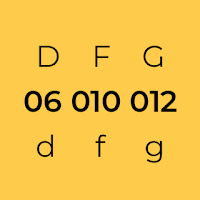
Should the Next NA/UBS Editions Use Numbers for Majuscules?

16

 Florian Voss asks on Twitter. What say you?

I say yes despite the one drawback. And while we’re at it, let’s get rid of the Gothic letters too. 


Wednesday, September 30, 2020

Brief Update on the UBS6 from Florian Voss

3
Over on Twitter, Florian Voss gives a short update on updates being made for the UBS6.


Readers may remember that last year at SBL Holger Strutwolf gave 2022 as a possible date for the NA29 with the UBS6 following after that.


Thursday, March 08, 2018

A New NA/UBS in 2021/22

19
Over at the Deutsche Bibelgesellschaft website, there is a German press release about a recent meeting of the new NA/UBS committee. Below is a translation into English. The most important news here is the projected date of completion (2021/22), the expected changes covering Mark and Acts, and the changed order of books.

Editors of “Nestle-Aland” and Greek New Testament meet at Bible Museum in Washington

Preparations for a new edition of the authoritative scholarly texts

Stuttgart / Washington. The editors for the Greek New Testament and the Novum Testamentum Graece (“Nestle-Aland”) met at the newly opened “Museum of the Bible” (MOTB) in Washington, DC. After the conference, the contours for new editions of the world’s two leading scholarly editions of the Greek New Testament are emerging. The Global Council of the United Bible Societies (UBS) recently recruited the international panel.

The editions are being prepared at the Institute for New Testament Textual Research founded by Kurt Aland at the University of Münster under the direction of Prof. Holger Strutwolf. In addition to him, the following scholars have been appointed as editors: Prof. Christos Karakolis (University of Athens), Prof. David Parker (University of Birmingham), Prof. Stephen Pisano (Pontifical Biblical Institute, Rome); David Trobisch (Green Collection, Oklahoma City) and Dr. Klaus Wachtel (University of Münster). This ensures that the experiences and interests of different regions and denominations (Protestant, Catholic and Orthodox) are incorporated. In addition, Dr. Simon Crisp (UBS) and Dr. Florian Voss (German Bible Society) are working with the panel.

“The research of the text of the New Testament is at an exciting stage,” reports Florian Voss. As part of a large-scale, international research project in Münster, Birmingham and other cities, the Greek initial text of the entire NT, the so-called Urtext, is newly constituted. As a result, among other things, the Greek text is changing in many places. “This will also affect the interpretation of the text and the translation,” explains the editor for the German Bible Society. New editions are planned for 2021/2022. They will bring changes especially in the Gospel of Mark and Acts. Furthermore, the scholars are considering adapting the order of the New Testament writings to the tradition prevalent in the manuscripts, according to which Acts is immediately followed by the so-called Catholic Letters: the Epistles of James, Peter, John, and Jude.

The German Bible Society, in consultation with the United Bible Societies, publishes the most important scholarly editions of the Biblical texts. The editions are the basis of Bible translation and exegesis worldwide.