Showing posts with label E.C. Colwell. Show all posts

Thursday, July 07, 2022

Colwell on Archaic Mark

0

For a while now I have been casually on the lookout for an article in the Emory University Quarterly, and so far I haven’t had access. I searched this morning and found it online: Ernest Cadman Colwell, “An Ancient Text of the Gospel of Mark,” (Emory University Quarterly 1.2 [1945]: 65–75).
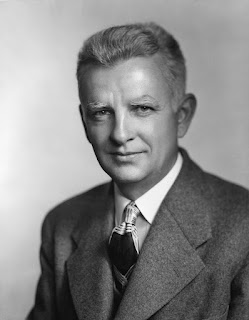
E.C. Colwell
Credit: University of Chicago Photographic
Archive, [
apf1-01777] Hanna Holborn
Gray Special Collections Research Center
University of Chicago Library.

It’s an interesting article—there is definitely a popular-level tone to it, and the way Colwell describes some aspects of textual criticism definitely reflects that. Of course we know now that Archaic Mark (which was once numbered 2427 on the k-Liste) is a forgery, but it had been my understanding that Colwell was always suspicious of it. I had been wanting to find this article to see if he voiced any such suspicions here. He does not do so explicitly, but he does talk about several unique aspects of Archaic Mark that are unlike any other manuscripts, and at one point he does make a statement that seems to hint that something was up:
The script of the manuscript is more than unusual; it is unique, The scribe of the Chicago Mark had several habits to which we cannot find parallels anywhere, and others to which no parallel exists in Greek manuscripts. He divides his text into words and even puts periods after abbreviations. These actions seem entirely normal to the twentieth-century American, but were unknown in the Greek manuscript tradition. Out of seventy-seven manuscripts photographed by W. H. P. Hatch on Mount Sinai, only one has word division, and it has other elements which suggest that it may be copied from the Greek text of a bilingual. In the large collection at Jerusalem, two manuscripts have word division, and both were written in the eighteenth century. [p. 68; emphasis mine]

That being said, do enjoy the article if you have a few minutes and haven’t seen it before.

Friday, January 15, 2021

E. C. Colwell and Kenneth Clark Lecture Audio

1
Juan Hernandez has recently made a great find in the course of some internet sleuthing. But I’ll let Juan tell you about it:

In addition to discovering audio of E. C. Colwell’s lecture on poetry, I also uncovered this 1963 lecture (at PTS) titled, “The Next Steps in the Textual Criticism of the NT.” A fascinating lecture that echoed all of the classic ideas we have come to expect from Colwell (e.g., about quantitative analysis, scribal habits, text types, etc.). The lecture was clear, cogent, and forceful. Interestingly, he did not call the Western text a text-type but talked about loose affiliations and used the language of “cluster,” which is fascinating since I thought Epp was the first to suggest this. You will LOVE it. I was rapt in attention (partly in disbelief that I was hearing his actual voice after so many years of just reading him). Colwell’s lecture is followed by another by K. W. Clark on his examination of Greek manuscripts in libraries in Greece. These are true gems. At any rate, I’m sharing it with you in case you think folks on the ETC blog might like to hear a lecture from one of the twentieth century’s leading textual critics.

You can find the audio at PTS’s website. These two papers were presented at the Bible Studies Conference, 1963. Thanks, Juan! Great find.

Tuesday, October 01, 2019

Colwell, Direct Copies, and Singular Readings in Dante

11
Paolo Trovato has alerted me to an interesting article just published in the latest Storie e linguaggi by one of his doctoral students, Federico Marchetti. The article grows out of his doctoral work and considers manuscripts of Dante that have known exemplars (Abschriften in NTTC terms). In the course of studying these, he addresses the use of singular readings as a way of determining scribal habits. This method has had its critics over the years (e.g., Strutwolf, Jongkind, myself, and now Hixson). Marchetti also criticizes it given his own results because it includes false data. Here is his conclusion:
If Po [the exemplar] had been lost, and if we had decided to investigate the scribal behaviour of Est [the copy] according to the Colwell method (that is, by calculating the percentage of textual agreement with the rest of the surviving manuscript tradition), we would necessarily have considered the scribe of Est responsible both for his own errors (which affect 0,06% of the verses) and for those that are ascribable to earlier stages of the tradition (which affect 17,6% of the verses). It is evident that such a diversity in approaches leads to a dramatic discrepancy in outcomes and their degree of reliability. Applying the Colwell method, we would certainly talk about a “scribal version” or “scribal revision” in this case, but – as we have just seen – the copyist of Est is in fact a very diligent scribe, careful about the formal features of his model as well as about its substance. In conclusion, the data collected bear out the necessity of making use of the genealogical-reconstructive method; more in general, they advocate the validity of the Neo-Lachmannian approach.
What I didn’t see in Marchetti’s article is a recognition that Royse, for example, fully recognizes this limitation or that Royse incorporates these false positives under his rubric of “the complex scribe.” But, as I have argued in my own work, the problem of deducing scribal habits from singular readings can’t simply be solved by appeal to the complex scribe since most scribally-created readings are not singular at all. I suspect part of the issue here for Marchetti is that he is after a different goal than determining principles of transcriptional probability (Colwell’s main goal). The NT, of course, is highly contaminated which is why Lachmannian approaches, whether neo- or not, have generally not been used.

In any case, my thanks to Paulo for alerting me to this essay. The entire issue will be of interest to our readers and can be found online here with abstracts.

Monday, August 15, 2016

Colwell’s Reversal of Westcott and Hort on Singular Readings

16
E. C. Colwell (source)
Westcott and Hort and E. C. Colwell are often connected in discussions of singular readings as they should be. But it’s not often appreciated how Colwell inverted WH’s primary purpose for studying singular readings. 

For WH, their main interest in singular readings was that their two prized manuscripts (01 and 03) often stood alone from the rest of the textual tradition as they knew it. Singular readings did give them access to the proclivities of 01 and 03 (a la Colwell), but this was not then aimed at elucidating transcriptional probability like it was for Colwell. Instead, this exercise was aimed squarely at determining which of 01 and 03’s singular readings had “a better title to consideration,” i.e., of being original (Intro, p. 233).

For Colwell, the study of singular readings is not only to “increase skill in the evaluation of that manuscript” (a la WH), but also “to gain knowledge of the habits of a scribe in general ... and thus to increase skill in the evaluation of readings.”* For Colwell, such a study was not aimed at identifying which singulars may claim originality. Rather, it was to give us access to those readings that we can be sure are the scribe’s rather than the author’s. 

Thus, unlike WH, Colwell’s interest in singulars hinges entirely “on the assumption that these readings are the creation of the scribe.” As such, they give us access to the work of the scribe as opposed to the author. In this, Colwell has reversed WH for whom the study of singular readings was aimed precisely at identifying those singulars that are the work of the author rather than the scribe. 

In other words, both recognize that singular readings can attune us to the scribe’s habits, but each uses this fact to focus on opposite sides of the scribe/author divide. WH are ultimately interested in authorial readings whereas Colwell is really interested in scribal readings. Obviously, this has to do with whether each thinks that singulars may be original. But the difference is still important especially as it comes to “skill in the evaluation of readings.” WH have their own view of how to best attain that and it has nothing to do with singular readings. But more on that another time.

---
*E. C. Colwell, “Method in Evaluating Scribal Habits: A Study of P45, P66, P75,” in Studies in Methodology in Textual Criticism of the New Testament, NTTS 9 (Leiden: Brill, 1969), 108.

Tuesday, January 26, 2016

What Are Text-Types For?

19
In his book Textual Criticism and Editorial Technique (1973), Martin West raises an important issue for the use of text-types in NT textual criticism. 

Here is West:
When the critic has established that no stemma can be constructed, how is he to proceed? He must, of course, see what groupings are apparent among the manuscripts, and whether the individual groups can be analysed stemmatically… (p. 42).
Here we should pause and note that, as Colwell noted in his essay on the genealogical method, this is exactly what Westcott and Hort did in rejecting the “Syrian” text. They applied stemmatic principles, not to individual manuscripts, but to groups. Having done this, they were able to exclude the Syrian text from consideration on the principle that it was purely derivative. We might call this principle eliminatio textuum descriptorum.

Westcott and Hort’s stemma has since been modified and the results have not usually been treated with such stemmatic rigor. But West goes on to explain how such groupings can still be useful to the critic:
…even if they [groups] cannot [be analysed stemmatically], he can treat them as units in his further cogitations, provided that they have a sharply defined identity. Thus he reduces his problem to its basic terms.
This reduction of the problem is a major reason why text-types have been so valuable in NT textual studies. Where you have four manuscripts in a tradition, you don’t need to reduce the material. But for the NT such reduction is a huge benefit, even a necessity. No one can keep dozens let alone hundreds of manuscript relations in their head and then apply them to specific variations. But three or four relationships is no trouble at all. Hence the value and appeal of text-types. They “reduce” the problem.

But note the key qualification in West’s sentence. The critic can treat groups as units in his further cogitations, provided that they have a sharply defined identity.

If this is true, then it would seem that the use of text-types in our text critical “cogitations” is in trouble since no such definition exists. Even Eldon Epp in his excellent essay on “textual clusters” says that “the tricky issue, of course, is determining, in percentage terms [West’s ‘sharply defined identity’], what extent of agreement in readings joins members into a group, and what degree of separation in agreements determines the existence of a separate group” (“Textual Clusters: Their Past and Future,” [2013], p. 571). 

Unfortunately Epp doesn’t have an answer to this “tricky issue” which makes me wonder if our failing effort to define text-types is an indication that we’re trying to solve the wrong problem. Maybe trying to reduce the problem is our problem and we should start looking for ways to use more manuscripts (not less) in studying the history of the text.